Restroom Trailer vs. Porta Potty: Which Should You Rent?
A restroom trailer feels like an indoor bathroom. A porta potty goes anywhere. The right choice depends on your site more than your budget. Here is how to decide in five questions.
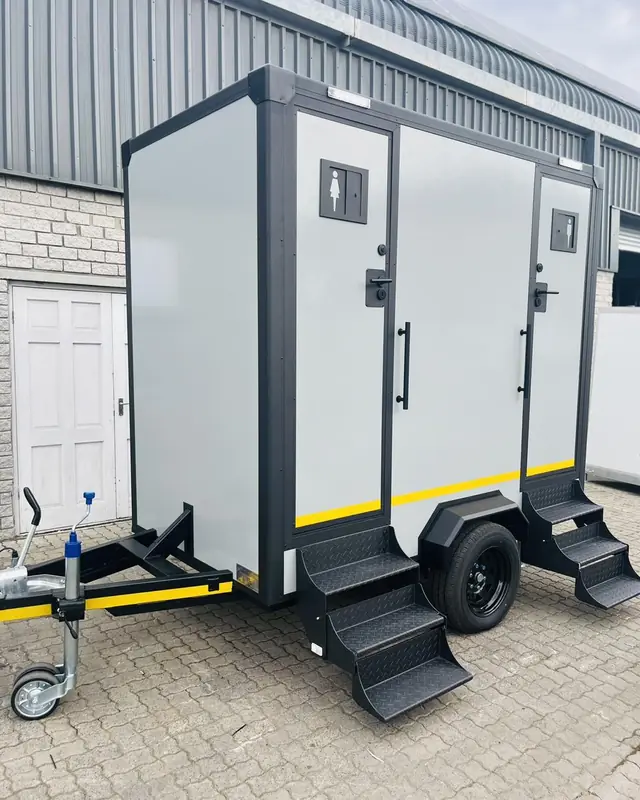
Does your site have level ground and power?
A restroom trailer needs a level pad, a standard outlet within about 100 feet and room for a truck to back in. If any of these is missing, choose flushing porta potties instead. A porta potty needs only a flat 4-by-4-foot spot.
How many guests and for how long?
A 2-stall trailer serves about 100 guests over 5 hours; a 3-stall serves about 150. For larger crowds, pair the trailer with portable units. Portable units scale one at a time, so a 200-guest event can use one 3-stall trailer plus 1 flushing unit.
Who are the guests?
Formal weddings and VIP areas favor trailers; casual parties, crews and festivals favor porta potties. Most trailers have steps, so add a wheelchair-accessible portable unit for guests who need it. Place it on firm, level ground near the trailer.
How soon is the event?
Restroom trailers book 2 to 8 weeks ahead for weekends; porta potties can often be delivered the same day. If your event is less than two weeks away, ask about trailer dates first, and hold flushing units as a backup in case the trailer is booked.
Side-by-side comparison
| Restroom trailer | Porta potty | |
|---|---|---|
| Toilets | China, real flush | Plastic; flushing option |
| Sinks | Vanities | Sanitizer or small sink |
| Site needs | Level, power, truck access | 4×4 ft flat spot |
| Lead time | 2–8 weeks (weekends) | Often same day |
| Starting price | $895 per event day | $175 per event |